Creed: The House That Bottled an Empire
Most perfume houses tell you their founder had a vision. Creed tells you their founder had a customer who couldn’t stop sniffing his own hands.
The story goes that in 1781, King George III was out hunting when he rested his chin on a gloved hand — and got distracted by how good the leather smelled. Those gloves had been made by a small London tailoring house, founded two decades earlier by James Henry Creed. The King was so taken with the scent that he commissioned a fragrance built around it: Royal English Leather, Creed’s very first perfume. A tailor had just accidentally become a perfumer, by royal request.
What followed reads less like a business history and more like a guest list of European power. By 1854, Empress Eugénie of France — wife of Napoleon III — liked Creed’s work enough to ask the family to relocate the entire house from London to Paris. Queen Victoria appointed Creed as official supplier to the royal household in 1855. Over the generations that followed, the house would go on to create custom scents tied to Winston Churchill, Grace Kelly, and Jackie Onassis — each fragrance, the story goes, built around something specific to that person’s life. It’s worth noting that perfume historians have raised questions about how much of Creed’s pre-20th-century history can be independently verified — but whether read as documented fact or expertly cultivated mythology, the storytelling itself has become part of what makes the house compelling. What isn’t in dispute is the family itself: seven generations of Creeds, each trained by the last, a continuity almost no other fragrance house can claim.
The scent built entirely out of one man’s life.
In 2010, to mark the house’s 250th anniversary, sixth-generation perfumer Olivier Creed and his son Erwin set out to do something unusual — build a fragrance where every single note traced back to a real historical figure. They chose Napoleon Bonaparte, and reportedly spent three years and over two hundred iterations getting it right.
The result was Aventus, and the symbolism runs deeper than most people realize. The opening blackcurrant comes from Corsica, where Napoleon was born. The birch in the heart nods to Louisiana, which he once ruled. The pineapple — his favorite dessert at the palace — became the note people now associate with the entire fragrance. Even the name is built from Latin: roughly “from the wind,” meant to evoke momentum and victory. Olivier Creed described the goal plainly — to capture strength, power, vision, and success, the qualities of a man who, whatever else history says about him, refused to accept the word impossible.
It worked. Aventus didn’t just become Creed’s best-selling fragrance — it became one of the most referenced, most copied, most discussed perfumes of the last fifteen years. The pineapple-birch-musk signature is so recognizable now that an entire micro-industry of “Aventus dupes” exists purely because the demand for that exact feeling — fruit up top, smoke and strength underneath — never slowed down.
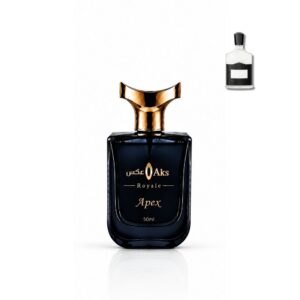
That’s the scent we built Aks Apex around. Not a casual nod to Aventus, but a serious attempt at the thing that made it legendary in the first place: that opening burst that makes people turn their heads, and a base that still says something hours later.