Dior: The House That Smelled Like Love
There’s a story Christian Dior told his perfumer in 1947, just before launching his first-ever fashion collection. He wanted a scent to accompany the dresses — something that would announce a new era after years of wartime austerity. His instruction to perfumer Paul Vacher was disarmingly simple: “Make me a perfume that smells of love.”
That perfume was Miss Dior, and the name itself came from a moment of pure chance. During a meeting, Dior’s muse Mitzah Bricard looked up as his sister Catherine walked into the room and exclaimed, “Ah voilà, Miss Dior” — and a legend got its name on the spot. Catherine wasn’t just a sentimental namesake either. She’d survived the French Resistance during WWII, and her brother built his entire fashion house in the years just after, with her name now permanently woven into one of the most iconic perfumes ever made.
That’s the thing about Dior — fashion and fragrance were never separate ambitions. The House was founded in Paris in 1946, backed by textile magnate Marcel Boussac, and by February 1947, the “New Look” collection had already redefined what femininity looked like after the war. Miss Dior launched that same year, sprayed liberally through the salon on the day of the show, so the perfume became inseparable from the moment itself. Christian Dior didn’t think of himself as just a couturier. He called himself a fashion and perfume designer, and that dual identity has defined the house for nearly eighty years.
After Dior’s sudden death in 1957, a 21-year-old named Yves Saint Laurent stepped in as creative director — but the house’s fragrance ambitions never slowed. Today, that legacy lives with François Demachy, Dior’s longtime in-house perfumer, who grew up apprenticing in the perfume fields of Grasse and has spent decades shaping the scents that carry the Dior name.
The scent of the new millennium.
In 1998, Demachy’s predecessor at the perfume house, Calice Becker, sat down with a creative brief for what would become Dior’s defining women’s fragrance of the modern era. The brief wasn’t a moodboard or a list of notes — it was one line: create the scent of the new millennium. Becker built J’Adore around that single idea, landing on something the New York Times would later describe as what gold itself would smell like if gold had a scent — mandarin and ylang-ylang up top, jasmine and rose in the heart, all wrapped in warmth. It launched in 1999 in a bottle shaped like a Greek amphora, fronted by Carmen Kass walking through a literal pool of liquid gold, and it’s remained one of the defining women’s florals ever since — carried for twenty years by Charlize Theron before passing to Rihanna in 2024.
A house with two icons, one masculine and one feminine.
On the men’s side, the story belongs to Sauvage. Demachy reached back into Dior’s own archive — to Eau Sauvage, the house’s 1966 men’s fragrance — and reimagined it for 2015 with Johnny Depp as the face, sending him roaring through the California desert in a vintage Dodge. The brief Demachy gave himself was almost cinematic: a fragrance inspired by the desert at twilight, where the coolness of night meets the last burning heat of the day. Bergamot up top, ambroxan and vetiver underneath — raw, but unmistakably refined. It worked almost too well: by 2021, Sauvage had become the best-selling fragrance in the world, outselling even Coco Mademoiselle and La Vie Est Belle, with LVMH reportedly moving a bottle every few seconds at its peak.
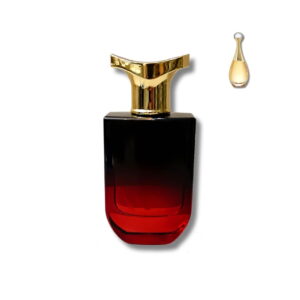
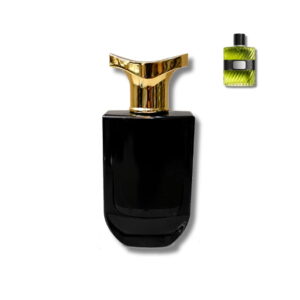
These are the two scents we studied closest when building our own Dior-inspired pair. OG 1966 — named for the year Sauvage’s lineage actually begins — chases the way the original holds its shape for hours, the part most inspired versions quietly give up on. Aks Verve takes on J’Adore’s golden, radiant florals, built to carry that same warmth through a full day.