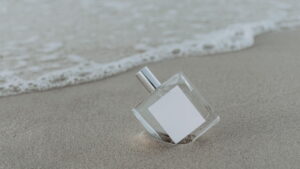
How to Store Your Perfumes Properly

You spend thousands of rupees on a perfume. You spray it carefully, enjoy it for a few months, and then one day you notice something is off. The opening smells flat. The longevity has dropped. The colour of the juice has darkened. You assume the perfume was fake, or that it just “went bad.” But the truth is far more likely: you killed it with bad storage.
Perfume is a chemical composition. Like food, medicine, or skincare, it degrades when exposed to the wrong conditions. Heat, sunlight, humidity, oxygen, and temperature fluctuations are the five enemies of every fragrance bottle. In Pakistan, where room temperatures can soar past 40°C in summer, where load shedding means air conditioning cuts out for hours, and where many people store their bottles on open shelves, dressing tables, or bathroom counters — the storage problem is real and costs people money every year.
This guide will explain exactly what damages perfume, why it happens at a chemical level, and how to store your collection properly so every bottle lasts as long as it should — whether you own one fragrance or fifty.
1. What Actually Happens When Perfume Goes Bad
Before getting into storage rules, it helps to understand what’s happening inside the bottle when things go wrong. Perfume isn’t a single substance — it’s a complex blend of dozens, sometimes hundreds, of individual aromatic molecules dissolved in alcohol (or oil, in the case of attars). Each of those molecules has its own stability profile. Some are robust and can survive years without changing. Others are fragile and begin to break down the moment conditions shift.
When perfume degrades, several things happen simultaneously. Oxidation occurs when oxygen molecules react with the fragrance compounds, altering their structure. This is why a half-empty bottle degrades faster than a full one — there’s more air inside the bottle in contact with the juice. Photodegradation happens when UV light from sunlight or even strong indoor lighting breaks apart sensitive molecules, particularly citrus notes and certain floral compounds. Thermal degradation is caused by heat accelerating chemical reactions that would otherwise take years, compressing months of slow change into weeks.
The result of these processes is a perfume that smells different from what it did when you bought it. Top notes — the fresh, citrusy, light molecules — are the most vulnerable. They degrade first, which is why a poorly stored perfume often loses its bright opening and starts smelling flat, heavy, or slightly sour from the very first spray. Over time, the heart and base notes can also shift, and the overall composition loses its balance.
2. Enemy #1: Heat
Heat is the single biggest threat to perfume in Pakistan. When the temperature rises, chemical reactions inside the bottle accelerate. As a rough rule in chemistry, every 10°C increase in temperature doubles the rate of a chemical reaction. This means a perfume sitting in a room at 45°C (a normal summer afternoon in Lahore or Multan) is degrading roughly four times faster than the same bottle stored at 25°C.
Most perfume manufacturers formulate and test their products assuming storage at around 15–25°C. That’s the typical indoor temperature in Europe and North America, where most major fragrance houses are based. In Pakistan, indoor temperatures during summer — especially during load shedding when air conditioning is off — can easily reach 35–45°C. That’s well above the safe range for long-term storage.
What Heat Does Specifically
Heat breaks down the lightest, most volatile molecules first. Citrus compounds like limonene and linalyl acetate are particularly sensitive. If your perfume has a fresh, citrusy opening, that’s the first thing heat will destroy. It also accelerates the oxidation of aldehydes, which contribute brightness and lift to many fragrances. Over weeks and months in a hot room, the perfume gradually loses its top notes, becomes denser and darker, and the overall scent shifts toward the heavier base components.
Heat can also cause the alcohol in the perfume to evaporate faster if the seal isn’t perfect. Over time, this changes the concentration ratio — you might notice the perfume smelling “stronger” or more concentrated, but it’s not a good thing. The balance the perfumer designed has been disrupted.
The Pakistani Summer Problem
In cities like Lahore, Karachi, Multan, Faisalabad, and Hyderabad, summer temperatures indoors can hover at 35–40°C even with fans running. During load shedding, temperatures climb even higher. If your perfume collection is sitting on a dressing table in a room that reaches 42°C for several hours every afternoon, you’re essentially cooking your fragrances slowly over the entire summer. By the time winter arrives, those bottles have already lost months of their potential lifespan.
3. Enemy #2: Light
Sunlight is the second major threat, and it works hand-in-hand with heat. Ultraviolet (UV) radiation from sunlight has enough energy to break chemical bonds in fragrance molecules. This process, called photodegradation, is particularly damaging to certain categories of ingredients.
Citrus oils, many floral absolutes, and some synthetic molecules used for freshness and brightness are highly susceptible to UV damage. This is one reason why high-quality perfumes are often packaged in dark or opaque bottles — the coloured glass acts as a UV filter, reducing the amount of light that reaches the juice inside.
The Dressing Table Trap
One of the most common storage mistakes in Pakistan — and worldwide — is displaying perfume bottles on a dressing table near a window. The bottles look beautiful lined up in the light, and many people treat their collection as decorative items. But a bottle sitting in direct or indirect sunlight for hours every day is being slowly damaged. Even if the curtains are drawn, the ambient light in a bright room contributes to gradual degradation over months and years.
Clear glass bottles are the most vulnerable. If you own a perfume in a transparent or lightly tinted bottle, it needs to be stored away from light entirely. Darker bottles — deep amber, black, or opaque packaging — offer some built-in protection, but even these shouldn’t sit in direct sun.
Artificial Light Matters Too
While sunlight is the main culprit, strong artificial lighting — particularly fluorescent tubes and bright LED panels common in Pakistani homes and shops — also emits UV radiation. It’s less intense than sunlight, but over time, bottles stored on open shelves under bright ceiling lights will still degrade faster than bottles stored in a closed drawer or cupboard.
4. Enemy #3: Humidity and Moisture
Humidity is a less obvious but still significant factor in perfume degradation. High humidity can affect the packaging, the cap seal, and indirectly the fragrance itself.
In Pakistan’s coastal cities like Karachi and Gwadar, where humidity regularly exceeds 80%, metal components on perfume bottles — caps, sprayer mechanisms, decorative elements — can corrode over time. This corrosion can compromise the seal of the bottle, allowing air to enter and accelerating oxidation. Even plastic components can warp or degrade in persistent high humidity.
The Bathroom Problem
Many people store perfume in the bathroom because it’s part of their grooming routine. This is one of the worst possible storage locations. Bathrooms in Pakistan experience extreme temperature and humidity swings — hot steam during showers, cool air from ventilation, and constant moisture in the air. These fluctuations are particularly damaging because they cause the air inside the bottle to expand and contract, effectively “breathing” air in and out through imperfect seals, which accelerates oxidation.
If your perfume currently lives on a bathroom shelf, move it. Today. Your bedroom drawer, your wardrobe, or a cupboard in a dry room are all far better options.
5. Enemy #4: Oxygen and Air Exposure
Every time you use your perfume, a small amount of air enters the bottle to replace the liquid that was sprayed out. Over time, as the bottle empties, the ratio of air to liquid inside the bottle increases. This air contains oxygen, which reacts with fragrance molecules in a process called oxidation.
Oxidation is one of the most common causes of perfume degradation. It changes the molecular structure of certain compounds, producing off-notes that weren’t part of the original composition. You might notice a slightly metallic, sharp, or “off” smell developing in a bottle that’s been open for a long time. That’s oxidation at work.
Splash Bottles vs Spray Bottles
Spray bottles (atomisers) are significantly better for preservation than splash bottles. A spray mechanism limits air exchange — only a tiny amount of air enters through the nozzle each time you spray. Splash bottles, on the other hand, expose the entire surface of the liquid to air every time you open them, dramatically increasing oxidation.
If you use attars or oil-based perfumes from open-neck bottles (common in Pakistan), try to use them up within a few months of opening, or transfer smaller amounts into a tightly sealed travel container to minimise the main bottle’s exposure to air.
6. Enemy #5: Temperature Fluctuations
Consistent temperature matters almost as much as low temperature. A bottle stored at a steady 30°C will actually fare better than a bottle that swings between 20°C and 40°C every day. Temperature fluctuations cause the liquid and air inside the bottle to expand and contract repeatedly, stressing the seal and increasing air exchange.
In Pakistan, this is particularly relevant because of load shedding. In many homes, the air conditioning runs for a few hours, cuts off during load shedding, and the room temperature shoots up, then drops again when power returns. This cycle can repeat multiple times daily during summer. If your perfume bottles are in a room experiencing these swings, they’re under constant stress.
Cars: The Worst Storage Location
Some people keep a bottle of perfume in their car for touch-ups during the day. In Pakistan, this is a guaranteed way to destroy a fragrance. A car parked in direct sunlight in Lahore or Karachi can reach interior temperatures of 60–70°C. Even in the glove compartment, temperatures regularly exceed 50°C. At these temperatures, degradation happens rapidly — a perfume left in a car for a full summer can be noticeably altered or completely ruined.
If you want fragrance available in the car, use a small, inexpensive travel spray that you replace regularly, and keep your main bottles safely stored at home.
7. How to Store Perfume Correctly: The Rules
Now that you understand what damages perfume, here are the practical rules for proper storage. These apply whether you own a single bottle or an extensive collection.
Keep It Cool: The ideal storage temperature for perfume is between 15–25°C. In Pakistan, this means storing your bottles in the coolest, most temperature-stable room in your house. During summer, this is usually a room with consistent air conditioning or the least sun exposure. If you have a room that stays relatively cool even during load shedding — a ground-floor room, an interior room without windows, or a room that’s shaded by the building itself — that’s your best option.
Keep It Dark: Store bottles in a drawer, a wardrobe, a cupboard, or a closed box. The goal is to eliminate exposure to both sunlight and strong artificial light. If you want to display a few bottles for aesthetic reasons, consider keeping the display bottles empty and storing the actual juice in a dark location. Alternatively, keep the boxes your perfumes came in — they provide a built-in light shield.
Keep It Dry: Avoid bathrooms, kitchens, and any area with consistently high humidity. A bedroom drawer or a shelf inside a wardrobe is ideal — these spots are typically dry, dark, and maintain a more consistent temperature than exposed surfaces.
Keep the Box: The original packaging isn’t just for looks. The cardboard box provides insulation against temperature swings and blocks light. Keeping your perfume in its box adds a genuine layer of protection. This is especially useful in Pakistan where temperature fluctuations from load shedding are a daily reality. The box acts as a buffer, slowing down the rate at which the bottle’s temperature changes.
Keep It Sealed: Always ensure the cap is securely placed back on the bottle after use. For spray bottles, this is less critical since the atomiser mechanism limits air entry. But for splash bottles and attars, a tight seal is essential to limit oxidation. If you notice a bottle’s cap has become loose or cracked, consider transferring the fragrance to a travel atomiser with a better seal.
Keep It Upright: Store perfume bottles upright, not on their sides. Storing a bottle sideways allows the liquid to come into prolonged contact with the sprayer mechanism, gasket, and cap materials, which can cause degradation or leakage over time. The alcohol in perfume can slowly break down rubber and plastic components in the cap seal, compromising the bottle’s integrity.
8. Should You Refrigerate Perfume?
This is one of the most debated topics in the fragrance world, and the answer is: it depends.
A refrigerator provides a cool, dark, stable-temperature environment — which checks three of the five storage boxes. For people in Pakistan, where summer room temperatures can exceed 40°C, the fridge is genuinely one of the best storage options available. Many serious fragrance collectors in the Middle East and South Asia do refrigerate their collections during the hottest months.
The Case For Refrigeration
A standard refrigerator runs at about 3–5°C, which is well below the ideal range but still safe for perfume. The cold slows down all chemical reactions, effectively putting your fragrance into a preservation state. The dark interior eliminates light damage. And the temperature is extremely stable, avoiding the fluctuations that stress bottles.
The Case Against
The main concern is that taking a bottle out of the fridge into a 40°C room creates a sudden temperature swing. If you do this repeatedly — taking the bottle out every morning to spray and putting it back every night — the constant expansion and contraction could be counterproductive. Also, some people report that very cold perfume doesn’t spray as well because the liquid is slightly thicker at low temperatures.
The Best Compromise
If you want to refrigerate your collection, store bottles you’re not currently using in the fridge and keep your daily-use bottle outside at room temperature. When a bottle runs low, rotate a new one out of the fridge and let it come to room temperature over a day or two before using. A dedicated cosmetics fridge running at 10–15°C is even better — warmer than a standard fridge but cool enough to meaningfully slow degradation, and you’re not mixing perfume with food.
9. How to Tell If Your Perfume Has Already Degraded
If you’re wondering whether your current collection has been damaged, here are the signs to look for.
Signs Your Perfume Has Degraded
The colour has darkened significantly — a slight deepening over years is normal, but a dramatic shift from light gold to deep brown usually indicates oxidation. The opening smells “off” — sour, sharp, metallic, or just different from what you remember. The longevity has dropped noticeably — if a perfume that used to last eight hours now fades in three, the composition may have broken down. The scent has become one-dimensional — the dynamic interplay between top, heart, and base notes has collapsed into a flat, monotone smell.
10. Quick Reference: Storage Guide for Pakistan
Factor | What to Avoid | What to Do |
|---|---|---|
Heat | Rooms above 30°C, dressing tables in warm rooms, cars | Coolest room in the house, drawer or wardrobe, fridge for long-term |
Light | Windowsills, open shelves, display near sunlight | Closed drawers, original box, dark cupboards |
Humidity | Bathrooms, kitchens, near windows in monsoon | Dry bedroom storage, wardrobe shelves |
Oxygen | Leaving caps off, splash bottles left open, half-empty bottles for years | Seal caps tightly, use spray bottles, decant attars into smaller containers |
Temperature swings | Rooms with frequent load shedding AC cycles, cars, bathrooms | Interior rooms, keep in box for insulation, stable-temperature spaces |
Position | Bottles on their sides, bottles near the edge of shelves | Store upright, away from areas where they could get knocked over |
11. Storing Attars and Oil-Based Fragrances
Attars deserve special mention because they’re a major part of Pakistan’s fragrance culture and have their own storage considerations.
Oil-based fragrances are generally more stable than alcohol-based perfumes because oils don’t evaporate as readily and are less susceptible to oxidation. However, they’re not immune. Oud oil, sandalwood oil, and rose attar can all degrade if stored improperly. The rules are similar to alcohol-based perfumes — cool, dark, sealed, and dry — but with a few additional points.
Glass containers are always preferable to plastic for attar storage. Some essential oil components can react with certain plastics over time, leaching chemicals into the oil or degrading the container itself. If your attar came in a plastic bottle, consider transferring it to a small glass vial with a tight-fitting cap.
Traditional attar bottles with glass stoppers are beautiful but not always the best for long-term preservation. The glass-to-glass seal can be imperfect, allowing air to enter slowly. If you have valuable attars you want to preserve for years, wrap the stopper junction with parafilm or PTFE tape to improve the seal.
The ageing tradition with attars is real. Many oud and sandalwood attars improve with age, developing deeper, more complex profiles over years. This only works, however, if the attar is stored properly. A poorly stored attar doesn’t age gracefully — it degrades. Proper storage is the difference between a five-year-old attar that’s extraordinary and one that’s lost its character.
12. Building a Storage System on a Budget
You don’t need an expensive fragrance cabinet or a dedicated refrigerator to store your perfumes properly. Here are practical, budget-friendly solutions that work perfectly in a Pakistani household.
The Drawer Method: A drawer in your bedroom dresser or wardrobe is one of the best storage locations available. It’s dark, protected from humidity, and maintains a more consistent temperature than any open surface. Line the drawer with a soft cloth to prevent bottles from rolling or clinking against each other, keep each bottle in its original box if possible, and dedicate one drawer to your fragrance collection. This costs nothing and works extremely well.
The Cupboard Shelf: If drawer space is limited, a shelf inside a closed cupboard or almirah serves the same purpose. Choose a shelf that’s not at the very top of the cupboard, as heat rises and the upper shelves in a room are always warmer than lower ones. A middle or lower shelf inside a closed cupboard is ideal.
The Shoe Box Method: If you want an even simpler solution, place your bottles inside a shoe box or cardboard box, close the lid, and put the box on the floor of your wardrobe or under your bed. The box provides insulation and light protection, the floor level keeps it in the coolest zone of the room, and the enclosed wardrobe or under-bed location adds another layer of temperature stability. This is surprisingly effective and completely free.
For Larger Collections: If you’re building a serious collection, consider a small cosmetics fridge — these are mini-fridges designed for skincare and beauty products, available in Pakistan for a few thousand rupees. They run at around 10–15°C (warmer than a regular fridge), which is perfect for perfume. They’re compact enough to sit in a bedroom and dedicated enough that you’re not opening them constantly like a kitchen fridge.
Final Thoughts
Proper storage is the cheapest way to protect your perfume investment. A bottle that could last you five years of daily wear can be ruined in a single Pakistani summer if it’s left on a sunny dressing table or in a hot car. Conversely, a well-stored bottle can retain its quality for a decade or more, giving you years of enjoyment from a single purchase.
The rules are simple: cool, dark, dry, sealed, and stable. In Pakistan, where heat is the dominant threat, anything you can do to keep your bottles away from high temperatures will make the biggest difference. A bedroom drawer, a wardrobe shelf, or a shoe box on the floor of a closet — these simple, free solutions are more than enough for most people.
Think of it this way: you wouldn’t leave chocolate sitting in the sun and then complain that it melted. Perfume deserves the same basic consideration. Store it well, and it will reward you every time you spray.